
I stood there, as I felt the raindrops starting to fall. I shut my eyes almost willing the land to share with me it’s secrets. But I heard nothing. I closed my eyes tighter, as if that would make a difference, but all I could hear were the trees swaying away the impending storm.
I opened my eyes and realized the field appeared somewhat limited by the foliage and the development of modern-day necessities.
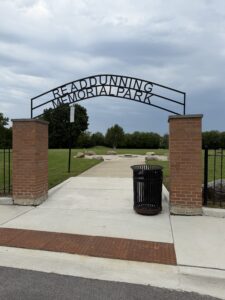
I paused before the black iron metal sign, that felt vaguely familiar, as it competed with an oversized trash can that seemed in little danger of overflowing. The memorial was tucked away from humanity.
It was my weak attempt to understand a man that no one remembered.
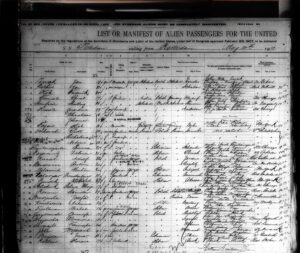
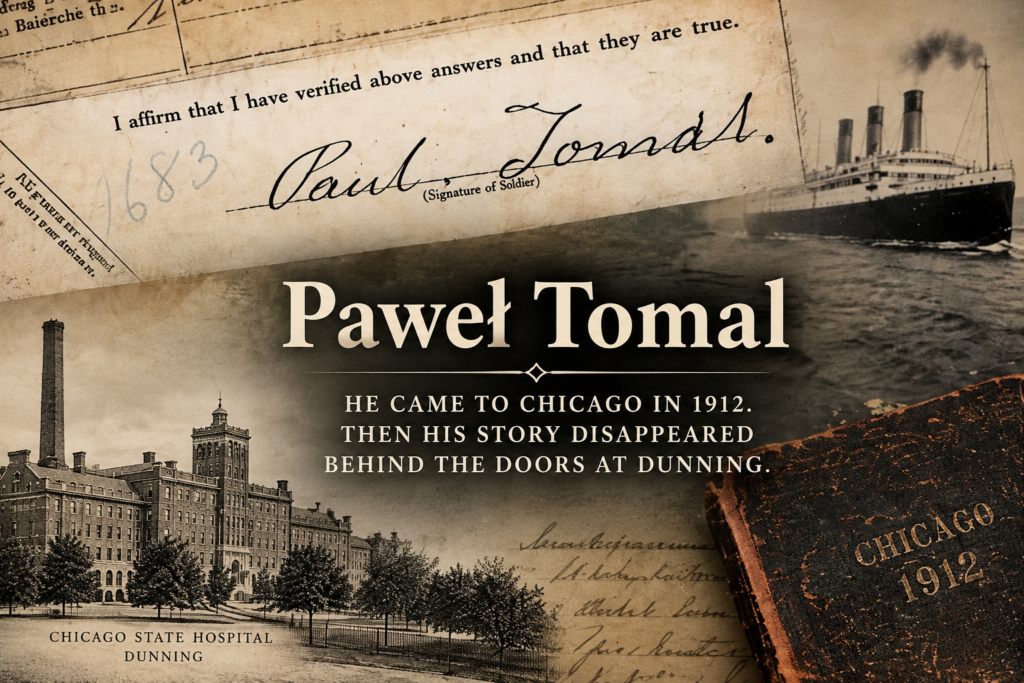
And as I took it in, I reflected on what brought me to him. As I was researching the history of my maiden name, it began with my great grandfather, Józef Tomal who arrived through Ellis Island in 1911. His oldest sister Zofia was already here, and I was aware his younger sister Maria would arrive a couple of years later but unbeknownst to anyone else, was their forgotten brother, Paweł. He arrived between them in May of 1912 at the age of sixteen.
Sixteen. The same age as my youngest son.
Like his siblings he was born in Biskupice Radlowskie at a time when the country of Poland had been partitioned. Their parents Jan and Annę appeared to be sending the kids over one at a time to escape the economic oppression of the Austro-Hungarian Empire, in a land known as the Kingdom of Galicia and Lodomeria.
And it was working until the first world war stopped that opportunity and the family was split on two continents.
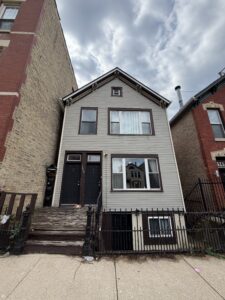
My first stop that morning was his home in 1917. He was living with his sister Zofia, her husband and four children in Chicago just around the corner from Holy Trinity Church on Noble Street which I could only assume was filled with unanswered prayers.
I looked at Door 2 and thought about the footsteps that had crossed that threshold-the same one that had somehow led me here more than a century later. As I stood there, a woman cleaning a first-floor window noticed me. I wanted to tell her his story and share this connection to her home. Instead I gave her a smile and reflected on the number of families that had moved through this address on Augusta. The stories and people lost to its history.
As I walked away, I could see the towers of Holy Trinity rising above the rooftops, demanding to be seen. There was an irony in it. I wondered how often Paweł had walked this same street beneath them, and what he imagined his life here might become.
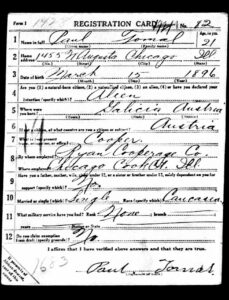
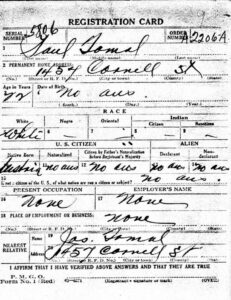
Then one day he walked out that door, down the same street, to a different life a quarter mile away, and everything had changed.
He was living with his brother Józef, and all those lines filled in just a year earlier-small declarations of who he was and how he saw himself -now read differently. The draft card signed September 1918 is full of “no answers” and “nones” and Paweł never signed it.
He never acknowledged any of it.
What happened in between those years?
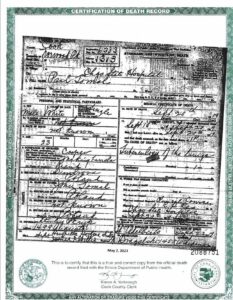
I only know what happened a year later. Initially the cause of death, Tuberculosis of the Lungs, made sense. It was sad, but a reality of its time. I studied the certificate and noticed Chicago State Hospital at the top of the document. At first glance, that wasn’t a surprise that he died in the city, but when I went to search for an address for the hospital, it was in that moment I learned that it was a psychiatric hospital from 1912-1970 and that it was referred to as “Dunning.”
And people didn’t go to Dunning for TB. At least not in 1919.
So why was Paweł there?
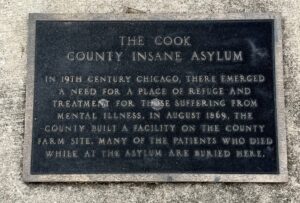
The more I learned about Dunning, the more unsettling the question became. This land served some of Chicago’s most vulnerable residents and decades after closing its doors, the state sold the property for development. In 1989 they uncovered human remains exposing a largely unmarked burial ground.
And as I made my way through the memorial, plaque by plaque, one line stayed with me:
“It was for those who died alone…”
The forgotten.
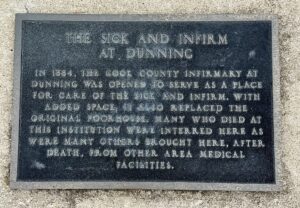
I couldn’t help but wonder how Paweł fit into this equation?
I knew that he had not been sent to Dunning because he had TB. By 1915 Chicago had opened a municipal tuberculosis sanitarium. My discussions with a local archivist suggested: TB alone was not the reason Paweł was at Dunning.
The rain began to fall harder as I made my way around the stones. I almost couldn’t swallow the words as I read them aloud reflecting back on Paweł and the way his life ended.
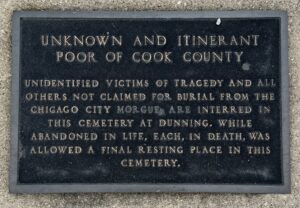
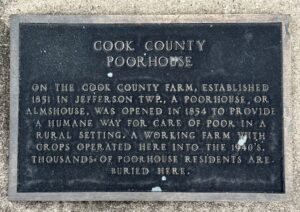
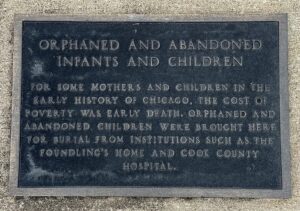
Maybe I needed to separate Paweł from the enormity of it all? Dunning was a story of institutions, illness, poverty, and thousands of identities that had slowly disappeared into history. But Paweł wasn’t thousands of people. He was a Tomal. He was my family.
It was personal.
I suddenly wanted something that belonged to him that felt more respectful and not so dismissive.
So I made my way to St. Adalbert’s Catholic Cemetery or known to some as the “Old Polish Cemetery” in Niles, Illinois.
I was encouraged that his name was in the kiosk but there was no section number, just “WD.” The office then explained that Paweł had been buried in a term grave, and more than a century later there was no marker and no precise headstone for me to find. They were able to locate a section.
So I just stood there, looking at the sign “Section 55.”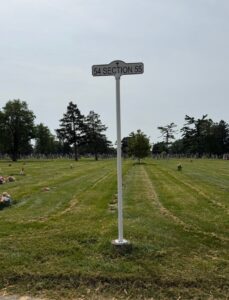
Paul was somewhere in there. I looked towards Zofia’s grave in the same section and then turned towards Józef’s across the way.
It was still, and even with the dark skies it was extremely peaceful.
And then it occurred to me, that this is what separated Paweł from Dunning. Not a marker. His family.
Dunning was the story of how he died but St. Adalbert’s reminded me how he lived.
He was a son and a brother. He had a job and a home. Even without a marker, his sisters and brother were all there in death, as they had been in life.
Somewhere between Dunning and Section 55, I found Paweł.
And he was forgotten no more.